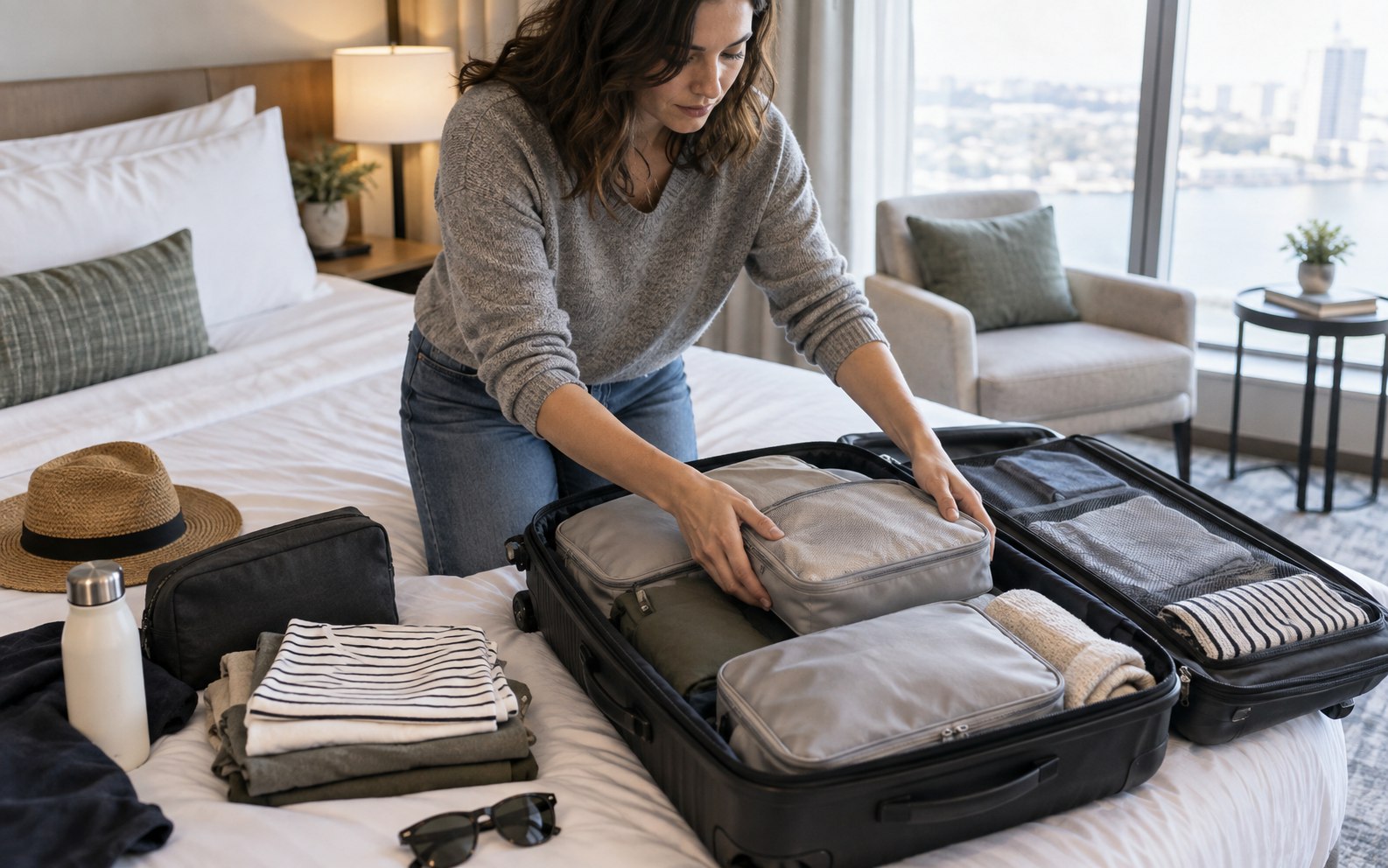
On the second stop of a short trip, clean shirts, worn socks, and tomorrow's outfit all share one suitcase. A small cube system can keep those stages separate and make an early checkout less chaotic.
Compare cube dimensions with the luggage interior, zipper quality, fabric visibility, structure, washability, and whether compression changes organization or merely encourages overpacking.
The most useful choice is rarely the model with the longest feature list. It is the one that fits the place it will live, the person who will use it, and the maintenance they will realistically complete. Start by writing down the recurring frustration you want to remove.
What matters in daily use
Use these checks to narrow the field before comparing finishes, bundles, or limited-time promotions.
- Measure the flat interior of the suitcase before choosing a set.
- Assign cubes by purpose, such as tops, underwear, or one complete outfit.
- Use a distinct cube or washable bag for worn clothing.
- Avoid filling compression cubes so tightly that zippers strain.
- Weigh the finished suitcase because organization does not reduce mass.
Confirm important specifications on the current manufacturer or retailer page. Materials, included parts, compatibility, and instructions can change without notice.
A scenario-based shortlist
These product types solve different versions of the problem. MagazineSaaS has not physically tested the individual models linked below; the shortlist is a practical framework for further research.
Lightweight mesh cube set
Best for: Seeing contents quickly in a standard suitcase.
Tradeoff to consider: Mesh panels provide little moisture separation.
Explore current options ↗ Retail search link; no tracked affiliate ID is active at publication.Compression packing cubes
Best for: Bulky soft clothing in limited space.
Tradeoff to consider: Can encourage overweight luggage.
Explore current options ↗ Retail search link; no tracked affiliate ID is active at publication.Structured packing organizers
Best for: Frequent unpacking and drawer-like access.
Tradeoff to consider: Heavier and less flexible in irregular bags.
Explore current options ↗ Retail search link; no tracked affiliate ID is active at publication.Think beyond the checkout
Purchase price is only one part of value. Consider storage, cleaning, replacement parts, consumables, charging space, return shipping, and the time required to keep the product working well. A slightly simpler item can be the better long-term buy when it is easier to use and maintain.
If fit, comfort, or color matters, preserve the packaging and tags until you have checked the item indoors. For installed products, read the return policy before drilling, cutting, washing, or discarding protective material.
Before you buy
Avoid buying a large matching set before mapping what you pack. Several unused sizes add expense and take storage space between trips.
Measure the product and the route it must travel, open, charge, dry, or store. Check who handles warranty service, what the return window excludes, and whether commonly replaced parts are readily available.
The bottom line
A few well-sized cubes can shorten every hotel arrival and departure. Build the system around categories you actually use, while leaving enough room for the bag to close without pressure.
Choose the option whose limitations you understand and can live with. If a listing does not clearly explain dimensions, materials, essential compatibility, care, or return terms, keep researching.